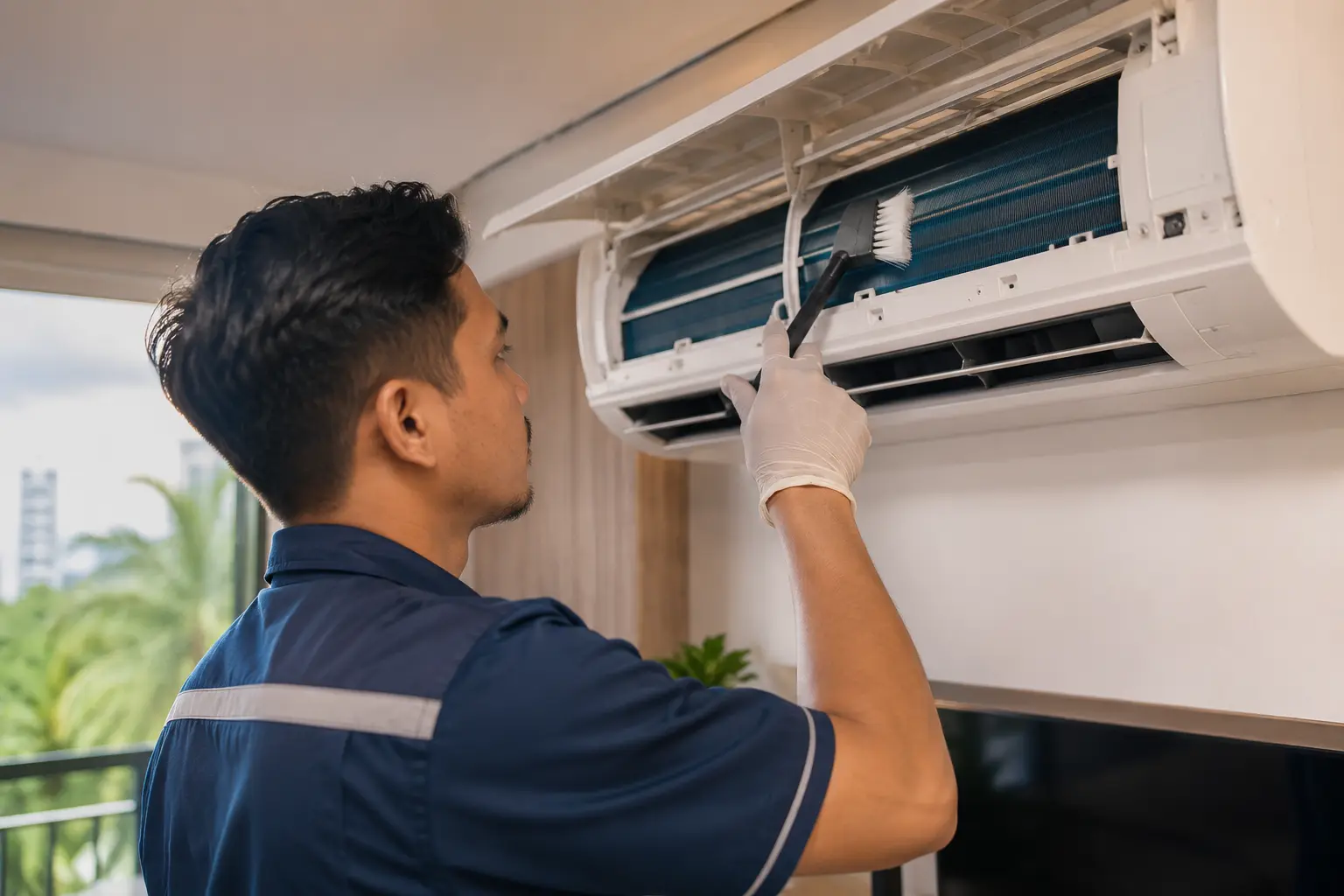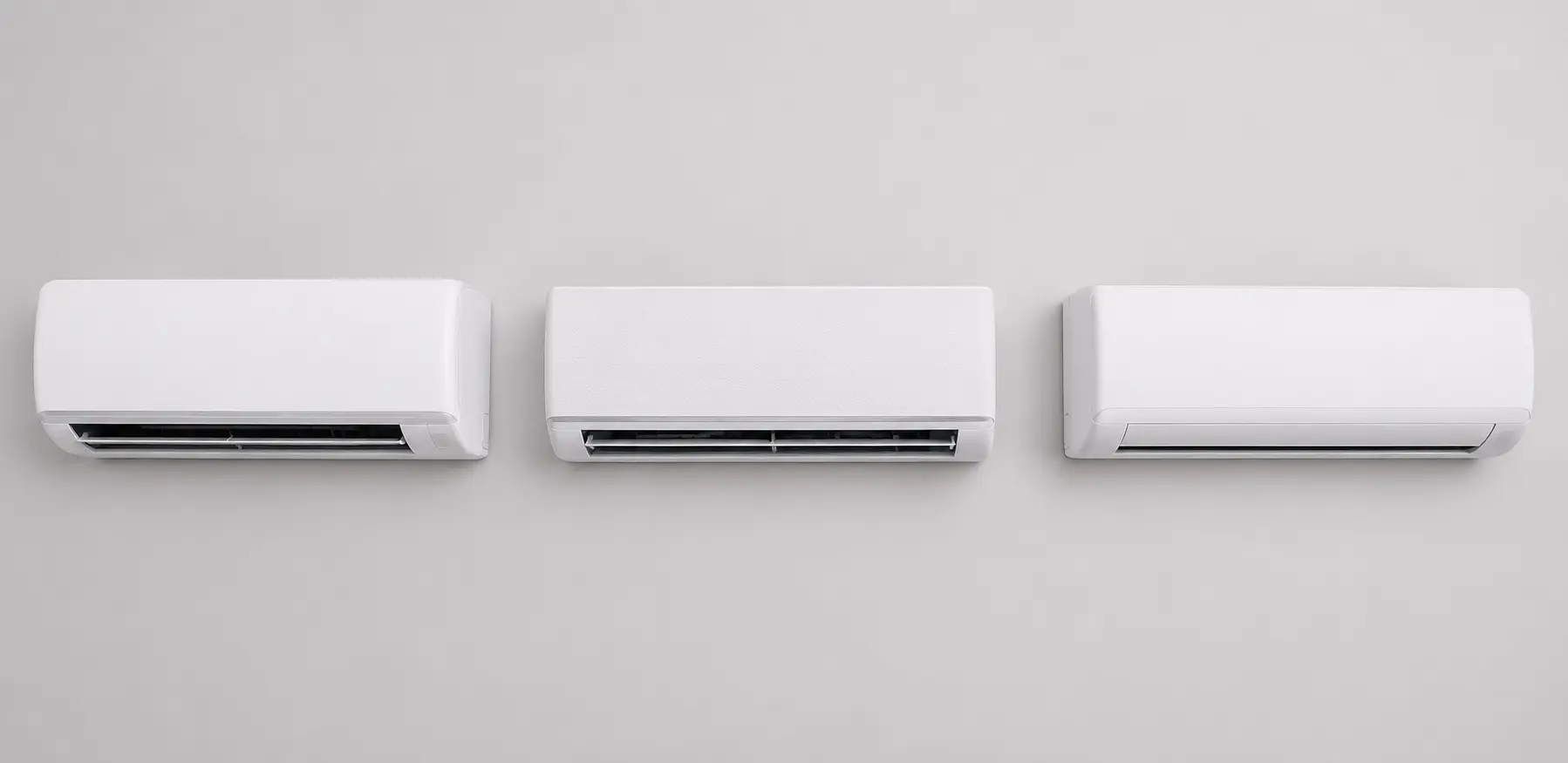
Residential aircon is straightforward — pick a brand, pick the right horsepower for your room size, done. Commercial spaces are more complicated. The wrong system type for your shop lot or office means uneven cooling, wasted money, or a costly rip-and-replace a few years down the line. This guide explains the three main system types used in Malaysian commercial spaces and helps you match the right one to your situation.
Why Commercial Spaces Are Different
A bedroom has one person, one heat source, and relatively simple airflow requirements. A shop lot or office has multiple people, equipment generating heat, varying ceiling heights, large open floor areas, and sometimes cooking or chemical fumes in the mix.
The system that works for your house will not necessarily work for your kedai or pejabat. Sizing and system type both matter — and getting either wrong shows up immediately in your electricity bill and your customers' comfort.
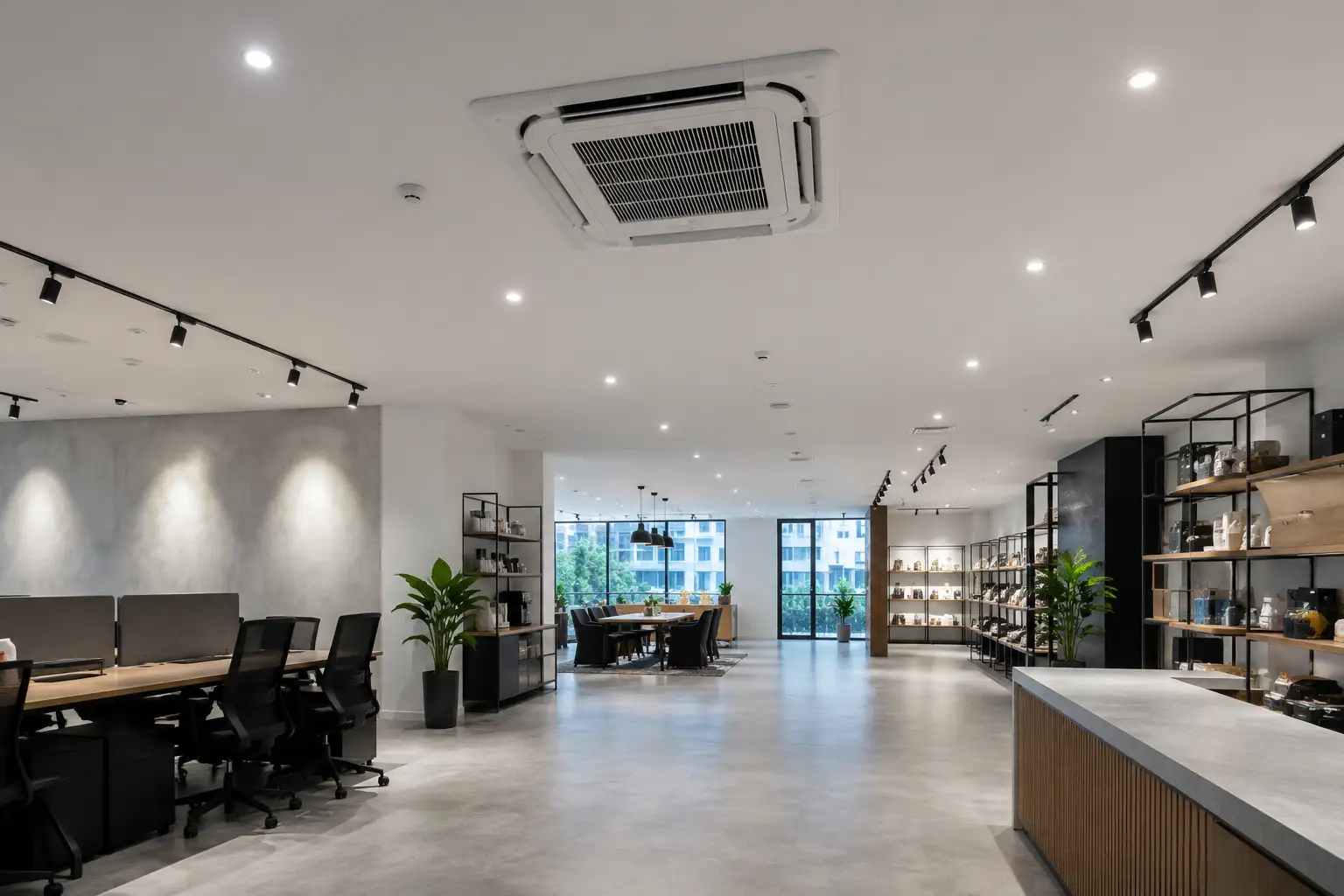
Cassette units sit flush in a suspended ceiling and distribute air in four directions — ideal for open commercial floors
Option 1: Split Units
A split unit is what most people picture when they think "aircond" — wall-mounted indoor unit, compressor outside. You almost certainly have one at home.
How it works in a commercial setting: Split units cool a defined zone. Air blows out from the wall in one direction. For small enclosed rooms — a private office, a small treatment room in a clinic, a storeroom — this is perfectly adequate.
Where split units fall short in commercial spaces: For larger, open-plan areas, a split unit on one wall creates a cold zone near the unit and a warm zone at the far end of the room. You compensate by turning the temperature lower, which means overcooling near the unit and higher electricity consumption overall.
Best fit for commercial use:
- Small enclosed rooms under 400 sq ft
- Individual offices with walls and doors
- Server rooms or equipment rooms
- As supplementary units alongside a primary cassette or VRV system
Typical capacity range: 1.0HP to 2.5HP per unit.
Option 2: Ceiling Cassette Units
A cassette unit sits flush in a suspended ceiling tile. Instead of blowing air from one direction, it distributes air in four directions from the centre of the space outward. This is what makes it well-suited to open floor plans.
Why cassettes work well in Malaysian shop lots: Most single-storey and double-storey shop lots have a long, rectangular floor plan. A cassette unit positioned centrally above the floor throws cool air outward in all directions, covering the space more evenly than any wall-mounted unit could. Cafes, retail shops, clinics, salons, and small offices in the 600–3,000 sq ft range are classic cassette territory.
The installation requirement: Cassette units require a suspended (false) ceiling to sit in. If your shop lot already has a false ceiling — which most renovated commercial spaces do — installation is straightforward. If you're fitting out a raw unit with bare concrete slab above, budget for the false ceiling as part of your renovation cost.
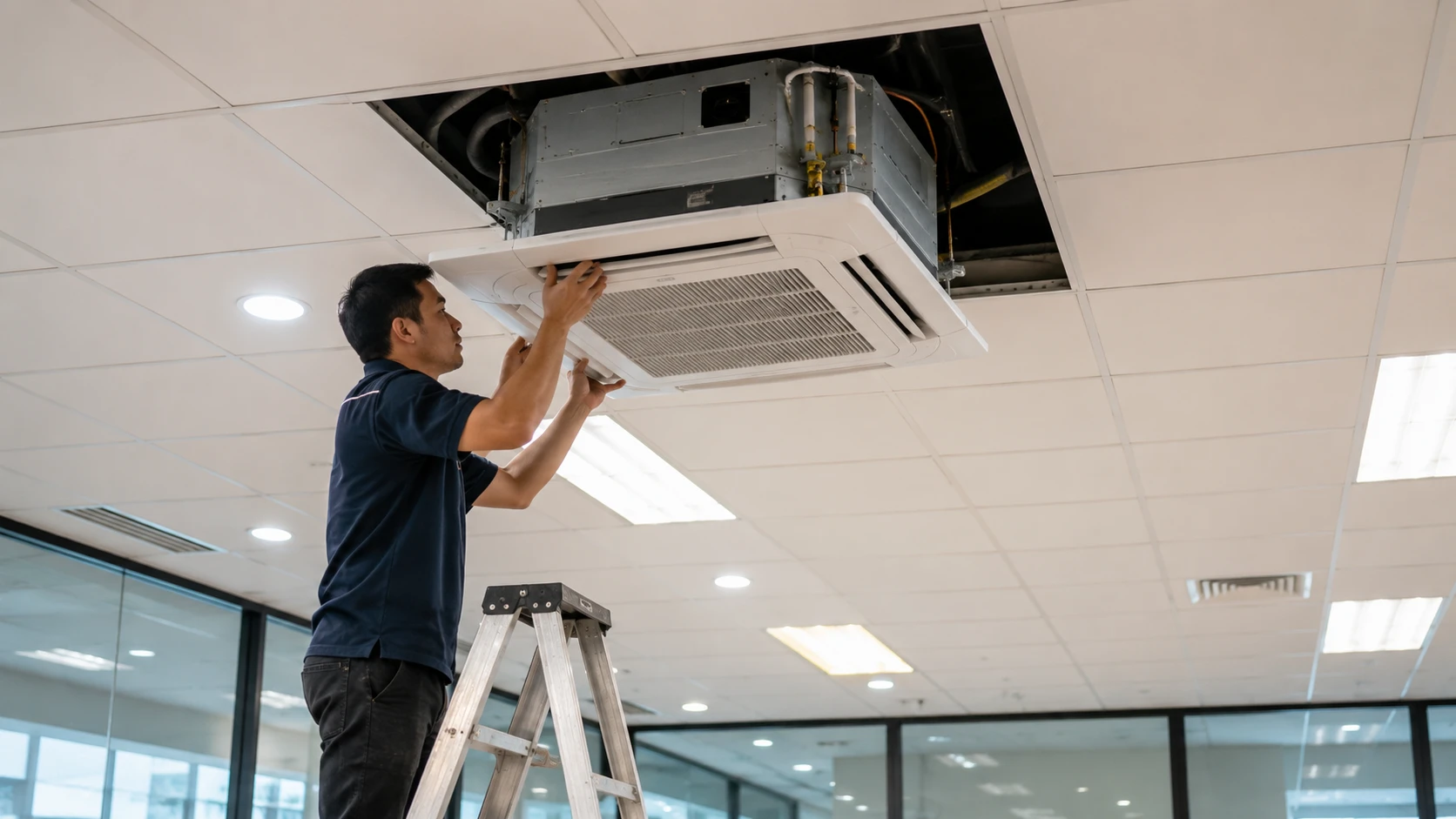
Cassette installation requires a false ceiling — budget for this if fitting out a raw shop lot
Best fit:
- Retail shops and showrooms
- F&B outlets and cafes (note: kitchens need ventilation planning, not just cooling)
- Clinics and dental practices
- Open-plan offices under 3,000 sq ft
- Any commercial space where aesthetics matter — cassettes are clean and unobtrusive
Typical capacity range: 2.0HP to 5.0HP per unit, with multiple units used for larger spaces.
Option 3: VRV/VRF Systems
VRV (Variable Refrigerant Volume) and VRF (Variable Refrigerant Flow) refer to the same technology — Daikin trademarked "VRV", other brands use "VRF". The core concept is one large outdoor unit connected to multiple indoor units across a building, all communicating and sharing refrigerant load intelligently.
How it works: Rather than each aircond unit having its own compressor outside, a VRV/VRF system has one or two large outdoor units that serve many indoor units — sometimes 20 or more across multiple floors. Each indoor unit has independent zone control. Rooms that are empty can be switched off without affecting other zones.
Why this matters at scale: In a multi-storey office or large commercial building, a VRV/VRF system can be significantly more energy-efficient than running many independent split or cassette units. The system optimises refrigerant flow across all zones dynamically. It also allows centralised building management from a single controller.
The honest trade-offs: VRV/VRF systems are expensive upfront — easily RM 80,000 to RM 200,000 or more depending on building size and number of zones. They require specialist installation and commissioning. Maintenance must be done by technicians trained on the specific brand's system. For a small shop lot or single-floor office, VRV/VRF is engineering overkill.
Best fit:
- Multi-storey office buildings
- Large retail or F&B flagship outlets (5,000 sq ft and above)
- Hotels and hospitality spaces
- Mixed-use developments where zone control across many rooms is required
- Buildings with serious energy efficiency targets
Quick Decision Guide
Not sure which type suits your space? Use the table below as a starting point — then get a contractor to visit and confirm the heat load before you commit to any system.
| If your space is… | Choose this system |
|---|---|
| Small enclosed room or private office (under 400 sq ft) | Split unit |
| Open-plan shop or office, 400–3,000 sq ft | Ceiling cassette unit(s) |
| Large open commercial space, 3,000–6,000 sq ft | Multiple cassette units or light commercial system |
| Multi-floor office building or 6,000+ sq ft complex | VRV/VRF system |
| F&B kitchen area | Cassette + dedicated ventilation (consult a specialist) |
| Short-term lease, minimal renovation budget | Wall-mounted split unit |
A Note on Sizing — This Is Not DIY Territory
Unlike residential aircon where a rough "1.0HP per 150 sq ft" rule of thumb gets you close, commercial sizing requires a proper heat load calculation. Ceiling height, number of people occupying the space, equipment heat output (computers, kitchen equipment, POS systems), and sun exposure on the building's walls and roof all affect what you need.
Undersizing means the system runs at full capacity constantly, never quite hitting your set temperature, and burning out components faster. Oversizing means short-cycling, poor humidity control, and wasted capital.
Any reputable commercial aircon contractor will conduct a site visit and heat load estimate before recommending a system. Be cautious of anyone who quotes you a system without seeing the space.
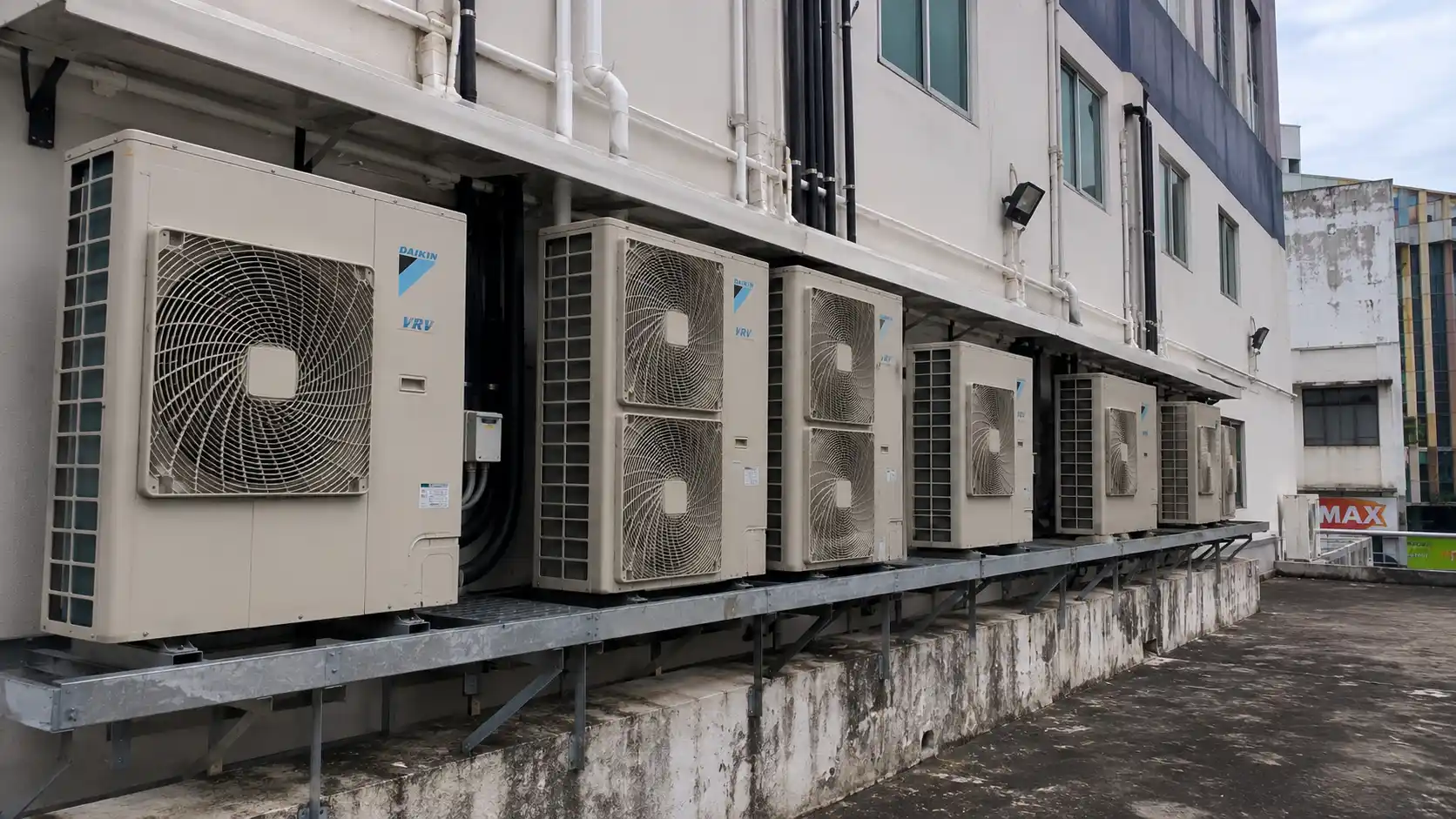
Commercial systems require specialist installation — always confirm sizing with a site visit first
Not sure which system suits your shop lot, klinik, or pejabat? Our team at Alphamatic services the Klang Valley and can advise you honestly — whether you need a single cassette or a full commercial system.
WhatsApp Alphamatic