Walk into any electrical shop and the salesperson will push you toward inverter. The premium over a non-inverter unit is real — usually RM 300 to RM 600 more upfront. The question Malaysian buyers reasonably ask is: does the electricity saving actually pay that back, and how long does it take? The honest answer is yes, for most households. But let's show you the numbers rather than just saying so.
What "Inverter" Actually Means
A conventional (non-inverter) aircond works like a light switch: the compressor either runs at full power or it switches off entirely. When your room reaches the set temperature, the compressor cuts out. When the room warms up again, it kicks back on at full speed. This start-stop cycle draws a spike of electricity every time it restarts.
An inverter aircond works more like a car accelerator: the compressor runs continuously but adjusts its speed. When the room is far from the target temperature, it works hard. Once the room is cooled, it slows down to a gentle maintenance pace — keeping temperature stable without switching off and on.
The result is smoother cooling, more consistent comfort, and meaningfully lower electricity consumption during the long periods when your room is already at temperature.
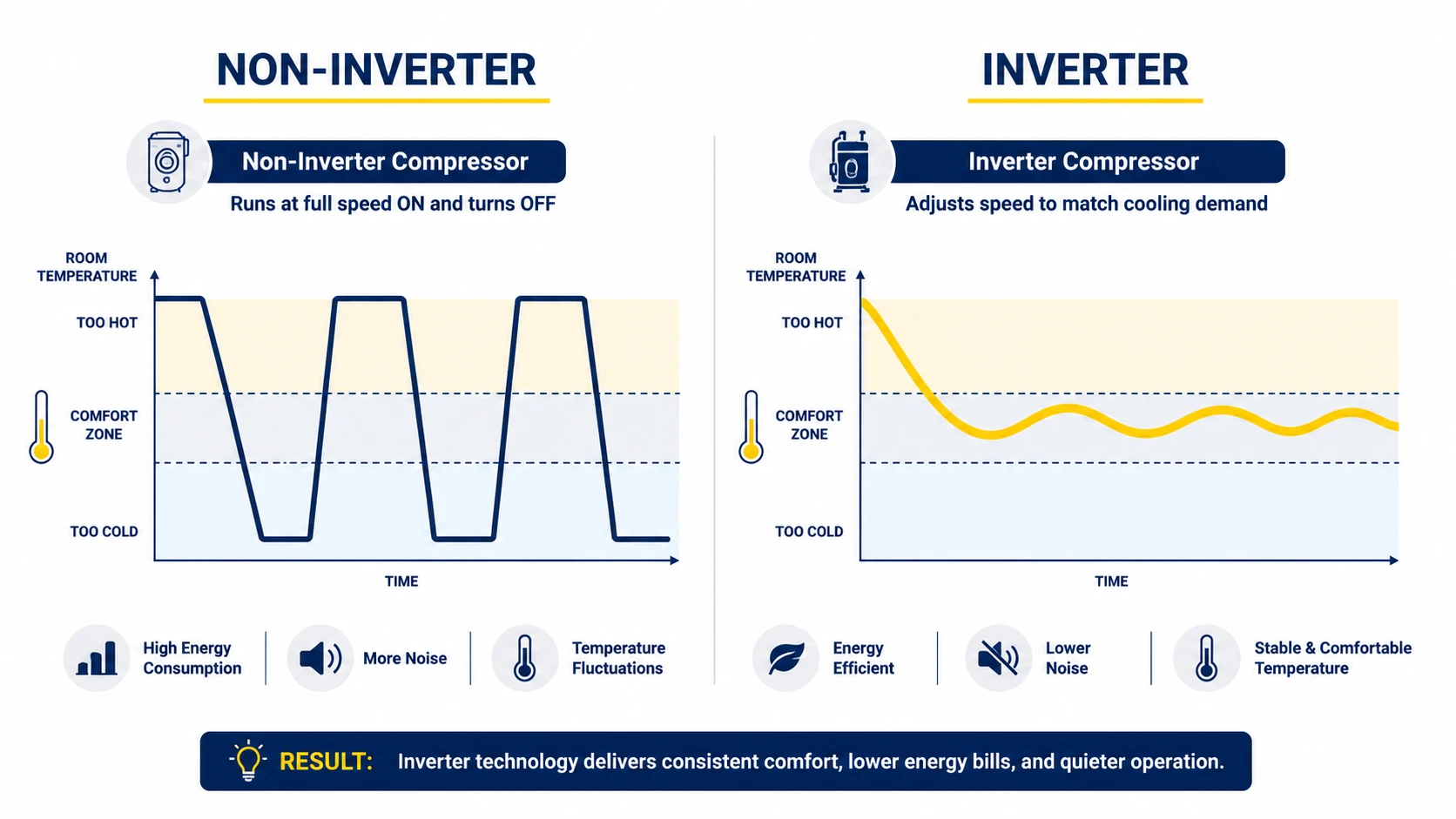
Inverter compressors maintain a steady output; non-inverter units cycle fully on and off
The Electricity Saving — Real Numbers for Malaysia
Let's use a practical example for a typical Malaysian household. Assumptions: 1.0HP unit, bedroom, running 8 hours per night; TNB residential tariff approximately RM 0.22/kWh (first 200 units tier); non-inverter unit consumes approximately 1.5 kWh per hour at full load; inverter unit average consumption approximately 0.9 kWh per hour.
| Non-Inverter | Inverter | |
|---|---|---|
| Hourly consumption | 1.5 kWh | 0.9 kWh |
| Daily (8 hours) | 12 kWh | 7.2 kWh |
| Monthly (30 days) | 360 kWh | 216 kWh |
| Monthly cost @ RM 0.22 | RM 79.20 | RM 47.52 |
| Monthly saving | — | RM 31.68 |
That's roughly RM 32 saved per month, or about RM 380 per year, on a single bedroom unit. If the price premium for choosing inverter was RM 500, you recover that in approximately 16 months — under a year and a half. After that, every month is pure saving. For a home with two or three units running daily, multiply accordingly.
Why Malaysian Conditions Amplify the Benefit
The inverter saving is greatest when you run the unit for long hours — because most savings occur during the low-speed "maintenance" phase after the room is already cooled. In Malaysia, this works in your favour:
- We run aircond for long stretches — a typical bedroom runs from 10pm to 6am, 8 continuous hours. That's a long maintenance phase where the inverter hums along at low speed while the non-inverter cycles on and off.
- It's hot almost year-round — unlike temperate climates where aircond is seasonal, Malaysian units run for most of the year. The saving compounds every month.
- TNB rates reward lower consumption — the tiered structure means heavy users move into higher rate brackets. Reducing consumption keeps more of your usage in the lower tiers.
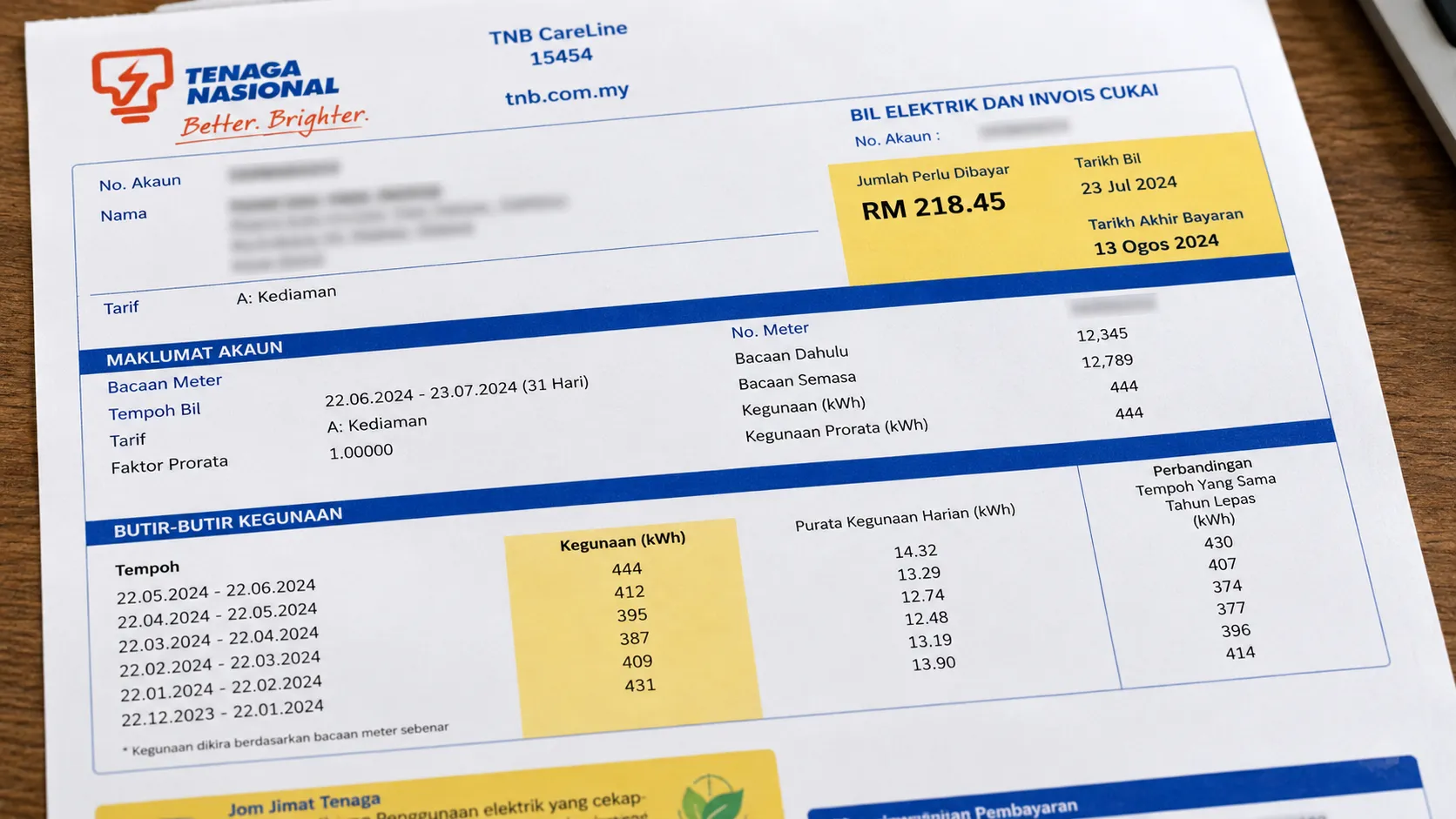
TNB's tiered tariff structure means reducing consumption can shift you into a lower rate bracket
When Inverter Makes Less Sense
There are situations where the premium is harder to justify:
- Rarely-used rooms — a guest bedroom that runs maybe 5 nights a month will take a very long time to pay back the price difference. A basic non-inverter is fine here.
- Very tight budget — if choosing inverter means stretching beyond what's comfortable, a properly maintained non-inverter is still a functional aircond. The saving exists, but it's not worth financial strain.
- Short rental periods — if you're a tenant who won't be in the property for more than a year or two, you may not stay long enough to benefit from the payback.
For these situations, non-inverter isn't a bad choice — it just doesn't carry the efficiency advantage.
Other Advantages of Inverter Beyond Electricity
Electricity saving is the headline, but inverter technology also delivers:
- Quieter operation — the compressor never makes that jarring startup sound; it simply speeds up and slows down
- Faster initial cooling — the compressor can run above its rated capacity briefly for a burst of cooling when you first turn on
- Longer compressor lifespan — constant start-stop cycling is harder on a compressor than smooth variable-speed operation
- More stable room temperature — no temperature fluctuation from the on-off cycling; the room stays closer to your set point
The Straightforward Verdict
If you run your aircond every night — or through the afternoon and evening — inverter is worth it in Malaysia. The payback period is well within the 8–10 year lifespan of a typical unit, and the comfort improvement is real. The premium exists because the technology is genuinely better.
If you use aircond infrequently, the calculation weakens. But for daily use in Malaysian conditions, inverter is the smarter long-term buy.
Not sure which inverter model makes sense for your room size or budget? Our team at Alphamatic services the Klang Valley and can advise you honestly on what to buy and what to avoid.
Thinking of upgrading to inverter or need advice on which model fits your space?
Ask Alphamatic